Trailhead notes A genuine crash tested dog harness requires independent laboratory dynamic testing under Federal Motor Vehicle Safety Standard 213 child restraint protocols. While many commercial manufacturers claim crash protection based on static pull tests, independent testing by the Center for Pet Safety proves that only strength-rated harnesses anchored directly to factory seatbelts prevent catastrophic projectile impact.
Transporting companion animals safely in motor vehicles requires understanding automotive crash physics. When an automobile travels at highway speeds, every passenger inside moves at the identical velocity. In a sudden thirty-five mile per hour frontal collision, an unrestrained sixty-pound dog generates approximately two thousand seven hundred pounds of projectile force, risking catastrophic injury to human passengers and fatal trauma to the animal.
Pet owners routinely purchase travel harnesses expecting commercial safety claims to guarantee collision survival. Unfortunately, the pet travel restraint industry operates without mandatory federal safety oversight. Marketing terms like crash tested or safety certified often describe basic static tensile tests that fail completely under actual dynamic crash forces. Dissecting marketing claims from certified engineering standards ensures handlers select reliable protective restraints for every journey.
- No Federal Mandate: The pet travel industry lacks mandatory government safety standards, making independent verification essential.
- Dynamic vs Static Testing: Static pull tests measure steady tension, whereas dynamic sled tests simulate violent high-G deceleration forces.
- Center for Pet Safety: The Center for Pet Safety (CPS) establishes the benchmark independent certification standard using realistic canine crash test dummies.
- Extension Tether Dangers: Long connection straps and plastic seatbelt clips fail under collision shock loads or cause severe spinal whip.
- Direct Belt Anchoring: Certified harnesses route factory vehicle three-point seatbelts directly through structural webbing loops across the canine chest.
What Defines a Genuine Crash Tested Dog Harness?
When consumers examine packaging for a crash tested dog harness, the phrase does not guarantee that the product survived high-speed impact. In the commercial pet market, an uncertified manufacturer can perform a low-speed workshop drop test, record product failure, and still legally print the words crash tested on retail packaging.
To understand restraint integrity, handlers must distinguish between static tensile testing and dynamic impact testing. Static testing applies gradual hydraulic tension to a buckle or fabric seam until the material stretches or breaks. While static testing demonstrates basic webbing tensile strength, it does not simulate the violent multidirectional inertia, rebound forces, or biomechanical rotation that occur during a real-world automotive collision.
Dynamic crash testing places an anatomically weighted canine crash test dummy into a test vehicle seat mounted on a hydraulic acceleration sled. The sled accelerates into a barrier at thirty miles per hour, replicating the exact impact forces defined by Federal Motor Vehicle Safety Standard (FMVSS) 213 for child safety seats. A genuine dog travel safety harness must keep the dummy restrained on the vehicle seat bench without hardware fracture, catastrophic stitching failure, or excessive forward excursion that strikes front vehicle seats.
Before packing your vehicle for an extended highway journey, review our comprehensive itinerary guide for a road trip with dog to ensure all travel equipment aligns with safe automotive handling standards.
How Does the Center for Pet Safety Evaluate Harnesses?
The Center for Pet Safety (CPS) is a registered non-profit research and consumer advocacy organization that pioneered independent crash testing for companion animals. In 2013, CPS conducted a landmark Harness Crash Safety Study in partnership with Subaru of America, testing multiple commercial harnesses claiming crash protection.
The 2013 study revealed alarming safety deficiencies across the pet travel industry: the vast majority of tested commercial harnesses failed catastrophically during thirty-mile-per-hour impact sled tests. Common failure modes included fractured metal d-rings, snapped plastic buckles, severed webbing loops, and complete dummy ejection from the vehicle seat bench. Only a tiny fraction of tested products maintained structural containment.
Following this research, CPS established a rigorous Certification Program based on strict engineering criteria. To earn CPS Certification, a manufacturer must submit products for independent testing at certified automotive test laboratories. Products that pass CPS certification (such as the Sleepypod Clickit series and select strength-rated harnesses listed on the official Center for Pet Safety certified products registry) demonstrate zero structural failure and controlled forward excursion across multiple dummy weight classes (checked October 2026).
| Common Safety Claim | Engineering Reality | Center for Pet Safety Standard | Recommended Action |
|---|---|---|---|
| “Crash Tested to 30 MPH” | Self-tested by maker; often denotes product test participation rather than passing survival scores. | Requires independent testing using FMVSS 213 crash sled protocols with calibrated canine dummies. | Verify independent certification on centerforpetsafety.org. |
| “Universal Seatbelt Tether Included” | Flexible webbing straps add dangerous slack, allowing high-speed projectile rotation into front seats. | Prohibits extension tethers; requires direct vehicle three-point belt integration through harness body. | Eliminate flexible tethers; route vehicle belts directly. |
| “Comfort Walking and Car Harness” | Standard walking harnesses feature lightweight plastic buckles that shatter under deceleration impact. | Requires automotive-grade nested steel buckles and broad padded energy-dispersing chest plates. | Use walking harnesses exclusively on foot, never in cars. |
| “Booster Seat Restraint” | Foam booster seats elevate animals into window strike zones without structural crash anchoring. | Classifies unanchored boosters as elevated launch hazards unless secured via LATCH structural points. | Reserve booster boxes for crated or floorboard placement. |
Source: Center for Pet Safety Harness Crash Test Studies and FMVSS 213 Protocols (checked October 2026).
Why Do Extension Tethers Fail Under Dynamic Crash Loads?
Many economy dog car harness products include a short extension strap that clips into the vehicle seatbelt buckle at one end and snaps onto the harness back ring at the other end. While convenient for allowing a dog to sit, stand, and shift positions, extension tethers introduce fatal mechanical hazards during collisions.
Physics dictates that restraint slack multiplies impact velocity. When a vehicle decelerates abruptly, an animal attached to a twelve-inch tether travels unrestricted until the strap reaches its physical limit. The resulting sudden jolt exerts extreme shock loading on connection hardware, frequently snapping cast-zinc swivel clips or tearing car seatbelt latch mechanisms. In addition, the excess slack allows the animal to rocket forward, striking the front seatbacks, dashboard, or windshield with crushing force.
In certified restraint systems, the vehicle factory three-point seatbelt routes directly through heavy-duty structural loops sewn into the back and sides of the harness. This direct connection utilizes the vehicle existing emergency locking retractor system, locking the animal firmly against the rear seat cushions within milliseconds of deceleration, just like a human passenger seatbelt.
Harness vs Crate vs Booster Seat: Which Restraint Is Safest?
Choosing the right vehicle restraint method depends on canine body size, vehicle layout, and travel duration. Comparing the three primary restraint options reveals distinct safety advantages for different travel scenarios:
- Crash-Tested Safety Harnesses: Ideal for small, medium, and large dogs riding on the rear vehicle bench seat. Harnesses provide direct restraint against the vehicle seat cushion, distribute impact forces across the canine ribcage, and require minimal vehicle storage footprint.
- Heavy-Duty Strength-Rated Travel Crates: Heavy aluminum or double-walled rotomolded crates (such as Gunner Kennels or Lucky Duck crates) secured with high-tensile ratcheting tie-down straps in vehicle cargo bays provide superior 360-degree protection against side impacts and rollover accidents.
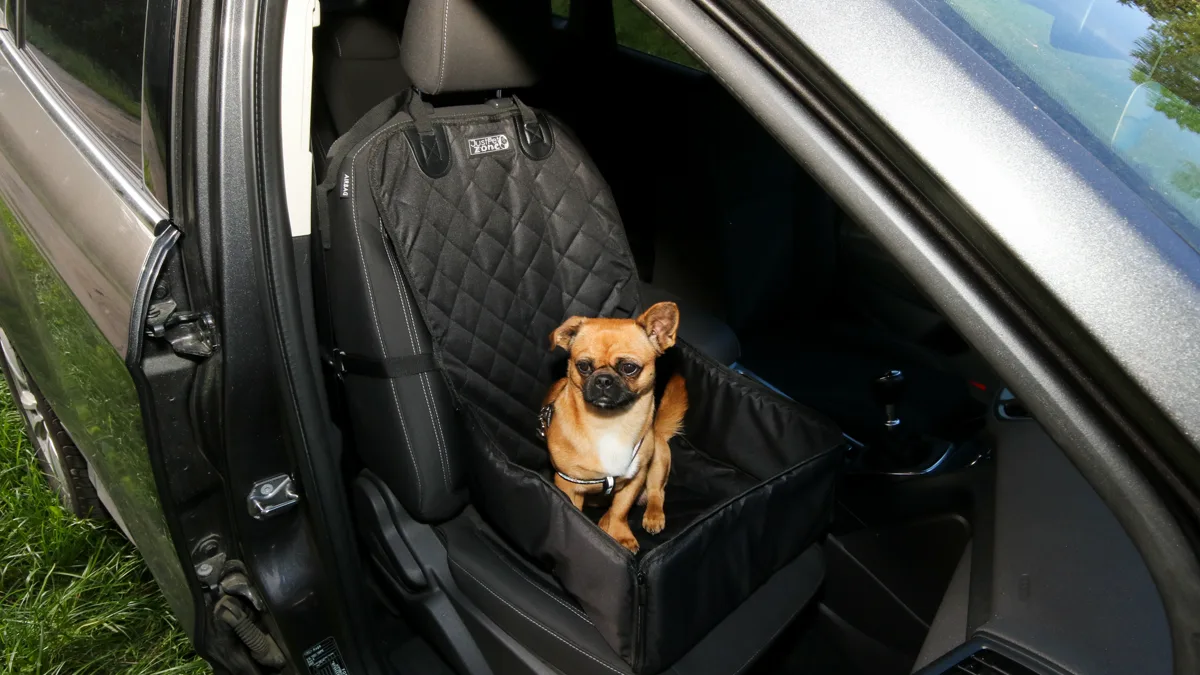
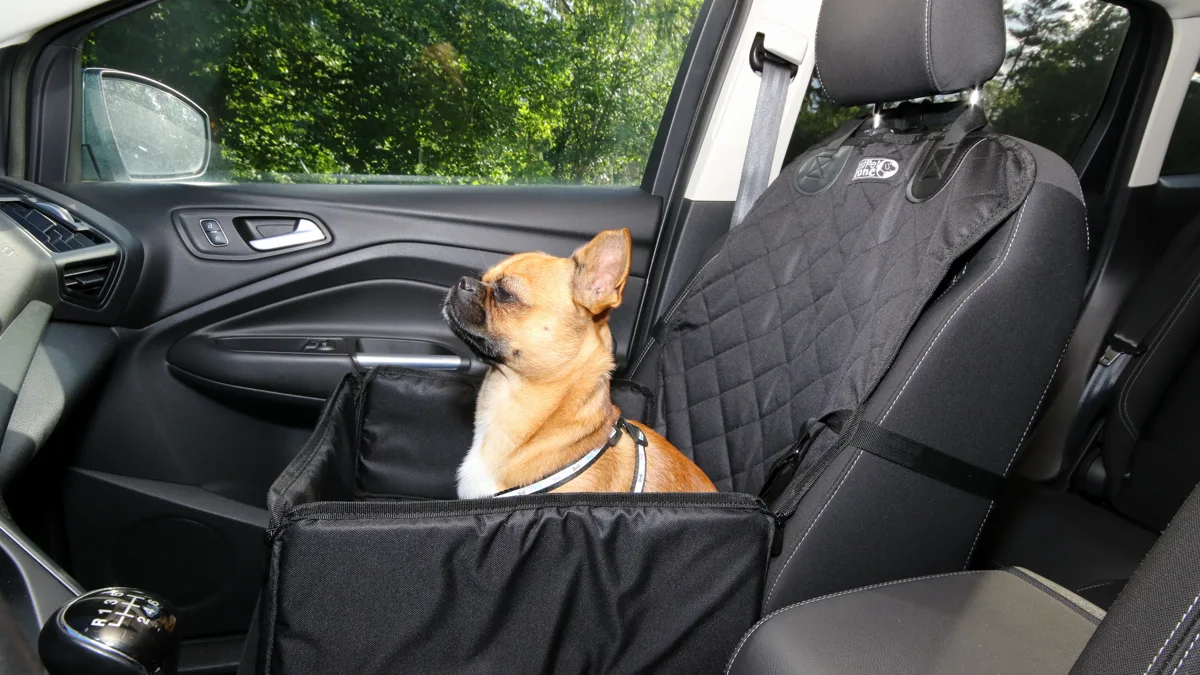
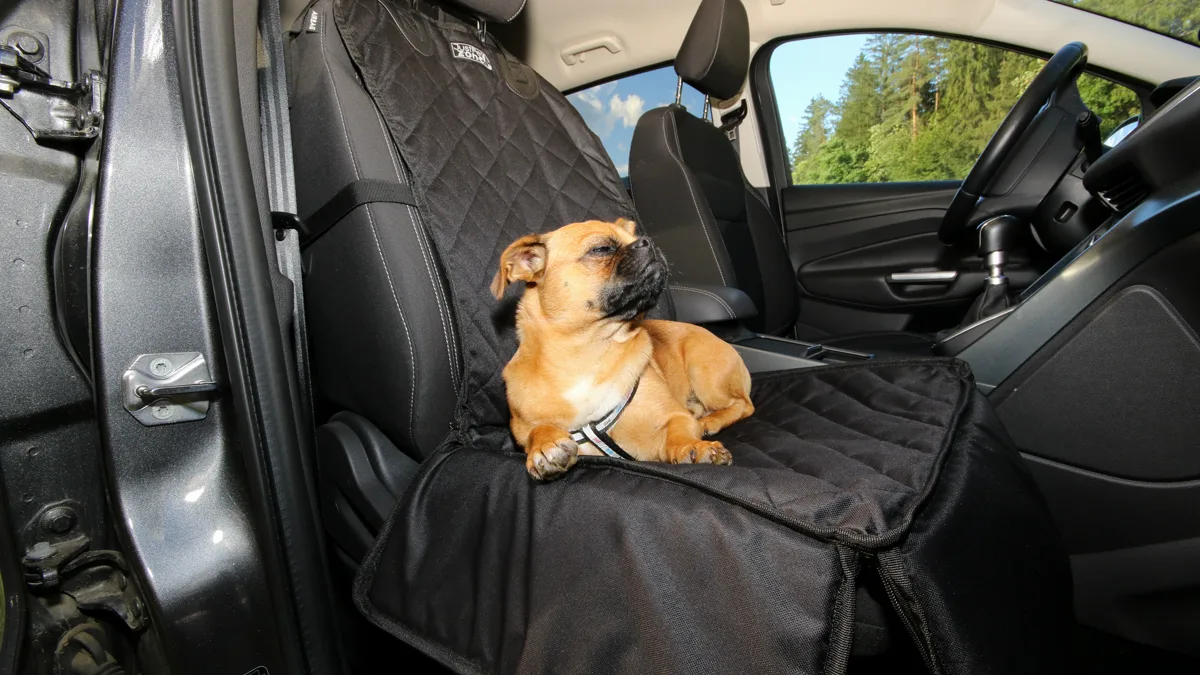
- Commercial Foam Booster Seats: Elevated booster baskets allow small toy dogs to look out windows, but standard commercial models lack structural crash strength. Unanchored booster seats turn small pets into dangerous projectiles during high-speed traffic deceleration.
When selecting travel equipment across our curated guide to road trips, ensure that rear cargo crates connect directly to factory welded cargo floor anchor rings, never to plastic trim panels or decorative grocery bag hooks.
Common Myths About Canine Vehicle Safety Restraints
Widespread consumer misconceptions about pet travel safety often lead handlers to adopt dangerous restraint practices:
Myth 1: Holding a dog on a passenger lap keeps them safe during collisions.
Fact: Human arms cannot hold a sixty-pound animal exerting thousands of pounds of impact force. In a front-seat collision, a lap-held dog is either crushed by the deploying passenger airbag (which detonates at two hundred miles per hour) or crushed between the human passenger and the dashboard.
Myth 2: Standard walking harnesses provide adequate protection in motor vehicles.
Fact: Walking harnesses are constructed from thin nylon webbing and plastic side-squeeze clips designed for walking pull forces under fifty pounds. These clips shatter instantaneously under crash shock loads.
Myth 3: Rear cargo barrier grates prevent all passenger injuries.
Fact: Metal barrier grates keep unrestrained dogs from entering the front cabin, but an unrestrained animal in the cargo bay will bounce violently against vehicle glass and rear quarter panels during an accident, suffering severe traumatic injury.
Vehicle Safety Harness Installation Checklist
Ensure correct harness fit and vehicle installation before turning the ignition key:
- Snug Anatomical Fit: Adjust harness straps so you can slide two flat fingers between the padded chest plate and the dog’s body.
- Rear Seat Placement: Always seat restrained animals in the second-row seat bench, never in front passenger seats equipped with active airbags.
- Direct Seatbelt Routing: Pass the factory vehicle seatbelt directly through the harness structural guide loops and latch firmly into the factory buckle.
- Retractor Engagement: Pull the vehicle shoulder belt smoothly to remove all excess slack, ensuring the emergency retractor engages immediately.
- Window Ventilation Limits: Open vehicle windows no more than two inches, preventing foreign debris, dust, and insects from causing ocular injury during highway travel.
Before you load the car
Can a dog ride in the front passenger seat with a safety harness?
No. Front passenger airbags deploy with massive explosive force designed for human adults. In a collision, an expanding airbag will crush a dog sitting in the front seat, causing severe or fatal trauma even if secured by a harness.
How do I know if a dog car harness is truly crash tested?
Look for third-party independent verification from the Center for Pet Safety (CPS). Certified products pass 30-mph dynamic sled testing under FMVSS 213 standards and appear on the official certified registry at centerforpetsafety.org.
Why are extension tethers dangerous for dogs in cars?
Extension tethers introduce dangerous slack into the restraint system. During sudden braking or impact, the tether allows the animal to accelerate forward before stopping abruptly, snapping hardware clips and striking vehicle interiors.
What is the difference between a crash-tested harness and a travel crate?
A crash-tested harness secures an animal directly to the rear vehicle bench seat, while a crash-tested crate provides an enclosed containment shell in the rear cargo area, offering extra protection against rollover impacts.
Can I use my dog’s walking harness as a car safety restraint?
No. Walking harnesses utilize plastic buckles and lightweight stitching designed for gentle leash control. In a motor vehicle accident, plastic buckles shatter immediately under dynamic collision forces.
How we researched this guide: Dynamic crash testing data and restraint evaluations follow published studies from the Center for Pet Safety (centerforpetsafety.org) and Federal Motor Vehicle Safety Standards (FMVSS 213 child restraint testing protocols). The article was drafted with AI assistance and reviewed by an editorial writer.
Sources: Center for Pet Safety (centerforpetsafety.org), National Highway Traffic Safety Administration (nhtsa.gov), American Kennel Club (akc.org), and Consumer Reports Automotive Safety Division (consumerreports.org).