Trailhead notes Dog friendly national parks permit pets primarily in developed zones, campgrounds, and paved paths on a physical six-foot leash under federal regulation 36 CFR § 2.15. While dirt hiking trails remain restricted in most national parks, notable exceptions like Acadia and Shenandoah offer hundreds of miles of dog-welcoming unpaved trails.
Planning outdoor travel across public conservation lands requires understanding federal park mandates. While millions of pet owners assume all federal lands share identical pet access rules, the National Park Service enforces rigorous conservation policies that differ sharply from the multiple-use policies of adjacent national forests. Knowing exactly where canines may walk protects delicate ecosystems, prevents ranger citations, and keeps domestic animals safe from backcountry hazards.
Before packing canine supplies for a national park itinerary, handlers must investigate the precise administrative boundaries and local trail regulations of each destination. Some park units offer extensive trail networks that welcome leashed dogs, while other flagship parks restrict companion animals strictly to asphalt parking lots and vehicle campgrounds. Diligent preparation ensures visitors enjoy scenic landscapes without compromising wildlife protection standards.
- Federal Leash Standard: Regulation 36 CFR § 2.15 requires dogs to remain on a non-retractable physical lead of six feet or shorter at all times.
- Developed Zone Access: Almost all national parks permit dogs along public paved roads, parking pullouts, designated picnic zones, and frontcountry campgrounds.
- Dirt Trail Restrictions: The majority of flagship national parks prohibit domestic animals from backcountry dirt hiking paths to protect fragile alpine soil and native fauna.
- Exception Parks Exist: Units such as Acadia, Shenandoah, Cuyahoga Valley, and Mammoth Cave maintain miles of unpaved trails open to leashed pets.
- Adjacent National Forests: U.S. Forest Service lands bordering national parks offer thousands of backcountry trail miles with broad pet access.
Are Dogs Allowed in National Parks Under Federal Regulations?
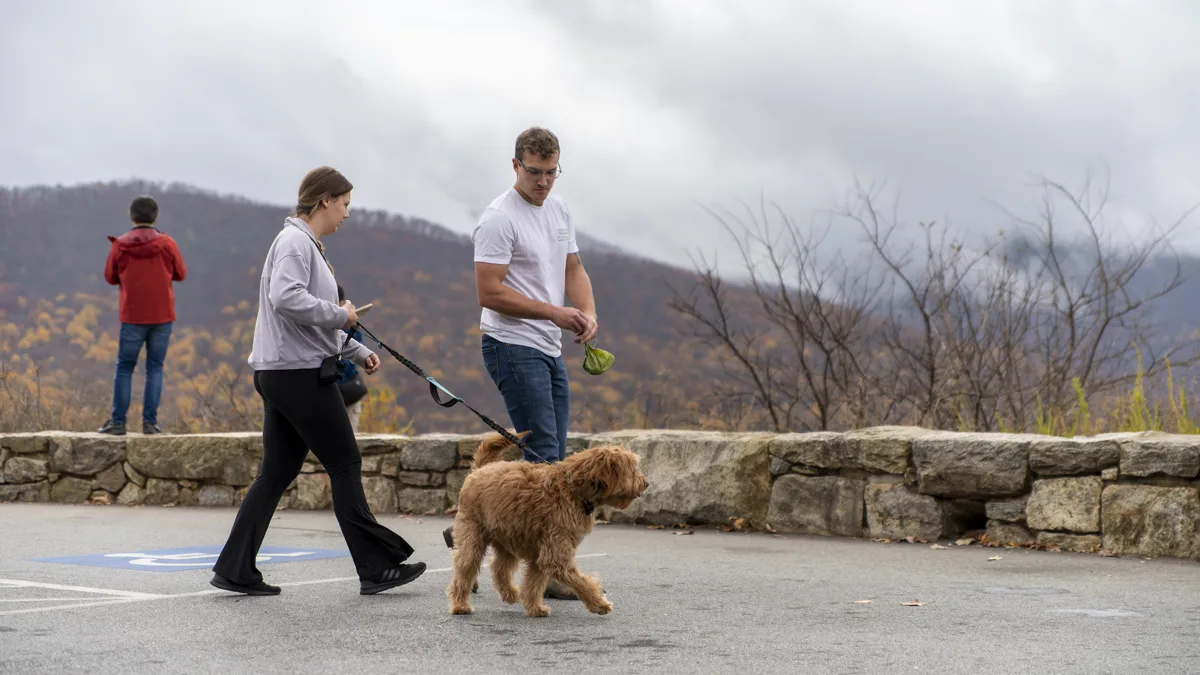
When travelers ask are dogs allowed in national parks, the general answer is yes in developed zones, but no across most backcountry dirt trails. Federal regulation 36 CFR § 2.15 establishes the baseline rules governing domestic pets across all units managed by the National Park Service. This federal regulation mandates that pets must remain restrained on a leash no longer than six feet or crated at all times.
The core statutory mandate of the National Park Service is resource preservation. Unlike recreational lands managed for multiple commercial and public uses, national park lands are dedicated to conserving natural wildlife behavior, native flora, and historic landmarks in an unaltered state. Domestic dogs introduce predatory scents, vocal barks, and non-native bacteria that disrupt resident wildlife populations such as bighorn sheep, grizzly bears, and nesting raptors.
Because domestic pets can provoke defensive reactions from apex predators or transmit infectious pathogens to wild canids like coyotes and wolves, the National Park Service limits pet activity primarily to road corridors and developed campgrounds. Leaving pets unattended in vehicles, tying animals to picnic tables, or letting leashes drag on the ground violates federal administrative codes and risks substantial administrative fines from law enforcement park rangers.
For visitors exploring diverse public recreation lands, comparing regulatory policies across jurisdictions is essential. Handlers planning backcountry outings can review our foundational guide on hiking with dogs to understand how trail guidelines shift between state and federal management authorities.
Which Dog Friendly National Parks Feature Hiking Trails?
While the vast majority of national parks restrict companion animals to paved viewpoints, several premier dog friendly national parks provide exceptional unpaved trail access. These exception units balance natural habitat conservation with expansive pedestrian trail networks that welcome leashed pets.
Acadia National Park in Maine stands out as one of the most pet-welcoming park units in the federal system. Acadia permits leashed dogs on approximately one hundred miles of designated hiking trails and forty-five miles of historic carriage roads, excluding only steep iron-rung ladder trails like the Precipice and Beehive. Similarly, Shenandoah National Park in Virginia allows dogs on nearly five hundred miles of hiking paths, including sections of the Appalachian Trail, restricting pets from fewer than twenty miles of hazardous rocky cliffs.
In the Midwest, Cuyahoga Valley National Park in Ohio permits leashed canines on over one hundred miles of woodland trails and the crushed-limestone Towpath Trail. Mammoth Cave National Park in Kentucky welcomes dogs on all surface woodland paths, offering dozens of miles of shaded forest hiking above the subterranean cave system. Review the official regulations for each park unit before arrival to verify seasonal closures on trails and parks.
| National Park Unit | Dog Trail Access Status | Leash Requirement | Official Regulatory Source |
|---|---|---|---|
| Acadia National Park (Maine) | Permitted on 100 miles of hiking trails and 45 miles of carriage paths; barred from ladder cliffs. | Strict 6-foot physical lead (36 CFR § 2.15). | National Park Service (checked October 2026) |
| Shenandoah National Park (Virginia) | Permitted on over 480 miles of trails; restricted on fewer than 20 miles of technical rock scrambles. | Strict 6-foot physical lead (36 CFR § 2.15). | National Park Service (checked October 2026) |
| Cuyahoga Valley National Park (Ohio) | Permitted on over 100 miles of hiking trails and the historic Towpath Trail. | Strict 6-foot physical lead (36 CFR § 2.15). | National Park Service (checked October 2026) |
| Grand Canyon National Park (Arizona) | Permitted on the entire 13-mile paved South Rim Trail; strictly barred below the canyon rim. | Strict 6-foot physical lead (36 CFR § 2.15). | National Park Service (checked October 2026) |
| Mammoth Cave National Park (Kentucky) | Permitted on all surface trails; strictly barred inside the subterranean caves. | Strict 6-foot physical lead (36 CFR § 2.15). | National Park Service (checked October 2026) |
| Yosemite / Yellowstone / Glacier | Restricted to paved roads, parking areas, and campgrounds; prohibited on all dirt trails. | Strict 6-foot physical lead (36 CFR § 2.15). | National Park Service (checked October 2026) |
Source: National Park Service Park Compendiums and Pet Regulations (checked October 2026).

How Does the National Park Service BARK Ranger Program Work?
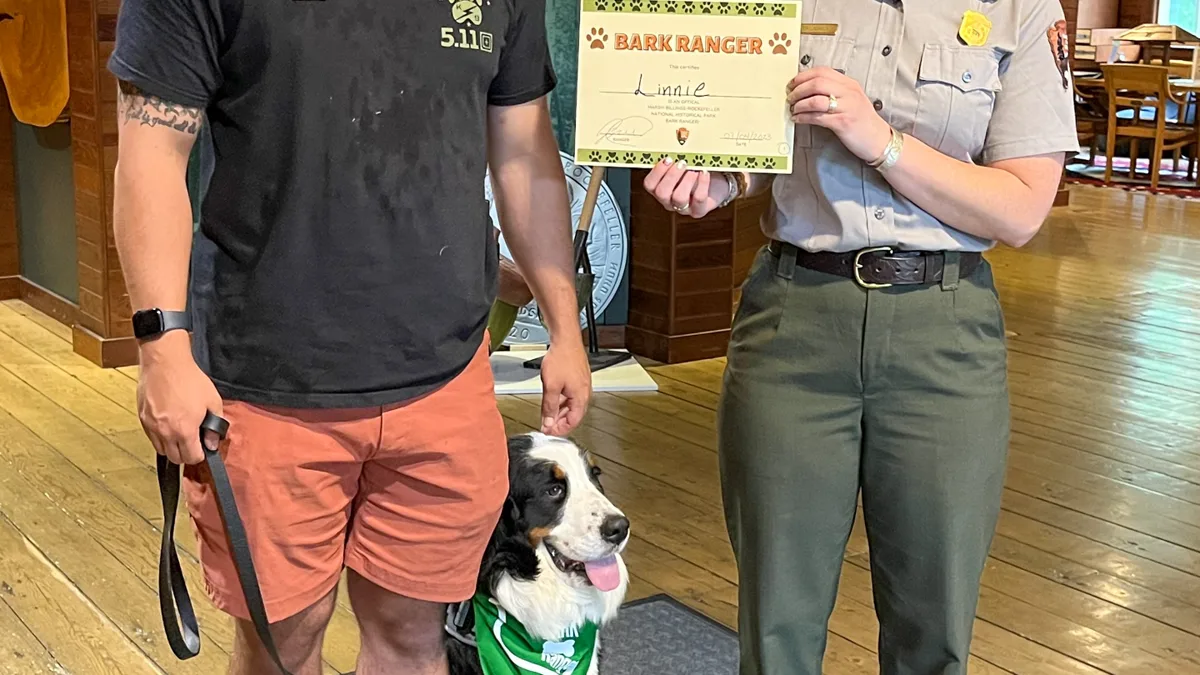
The official bark ranger program is an educational initiative established by the National Park Service to promote responsible pet ownership across public recreation parcels. Participating park units invite handlers and their dogs to take a formal stewardship pledge, learn local safety rules, and earn a commemorative badge or dog collar tag.
The program structure revolves around the four letters of the B.A.R.K. acronym. Each letter highlights a fundamental conservation behavior that protects wildlife, preserves natural resources, and guarantees safety for all park visitors:
- B: Bag Your Pet’s Waste. Handlers must collect all canine feces in sturdy plastic bags and transport them to designated trash receptacles. Leaving waste bags beside the trail is strictly prohibited under Leave No Trace ethics.
- A: Always Use a Leash. Dogs must remain on a physical lead measuring six feet or shorter. Retractable leashes, electronic shock collars, and voice-command control do not meet federal compliance standards.
- R: Respect Wildlife. Canines must maintain a safe, non-threatening distance from all wildlife. Barking, chasing, or approaching wild animals disrupts vital foraging patterns and can provoke aggressive defense.
- K: Know Where You Can Go. Handlers must verify which trails, overlooks, and facilities permit companion animals prior to setting out from the trailhead.
Visitors can participate in the bark ranger program by stopping at designated visitor center desks, reviewing park-specific safety guidelines with an on-duty interpretive park ranger, and purchasing an official brass tag. Participating in this program reinforces positive trail stewardship and demonstrates that well-mannered dogs and conservation policies can successfully coexist.
Why Are Adjacent National Forests the Premier Alternative?
When traveling to flagship national parks that prohibit dogs on dirt trails, exploring adjacent United States Forest Service lands provides an ideal solution. Most national parks in the American West and Southern Appalachians are directly bordered by expansive national forests that operate under flexible multiple-use recreation mandates.
For example, while Grand Teton National Park restricts domestic canines from all backcountry dirt trails, the adjacent Bridger-Teton National Forest offers hundreds of miles of alpine wilderness trails where dogs are welcomed on leash or under direct physical control. Similarly, while Rocky Mountain National Park bars pets from mountain trails, the surrounding Roosevelt and Arapaho National Forests feature rugged alpine ascents, pristine glacial lakes, and secluded forest paths accessible to canine hikers.
National forests provide dramatic scenery comparable to national parks without restrictive trail closures. Handlers must remain vigilant regarding seasonal hunting regulations, off-highway vehicle traffic, and open grazing allotments when trekking through national forest lands. Always verify active district ranger orders regarding local leash requirements before beginning a backcountry loop.
How Do Handlers Protect Wildlife and Fragile Habitats?
Protecting delicate wilderness environments requires strict adherence to conservation ethics when visiting dog friendly national parks. Alpine tundra vegetation, biological soil crusts, and thermal spring basins represent delicate ecological zones that take decades to recover from pedestrian or canine disturbance.
Never allow dogs to walk across biological soil crusts in desert parks such as Joshua Tree or Capitol Reef. These fragile black crusts consist of living cyanobacteria, lichens, and mosses that stabilize desert soils against severe wind erosion. A single canine footprint can fracture crust communities that required over fifty years to develop. Keep animals centered on established paved walkways or designated dirt paths at all times.
Wildlife encounters require immediate defensive positioning. If a handler spots large mammals such as moose, elk, bison, or bears along the trail corridor, shorten the leash to eighteen inches, step back calmly, and create a physical visual barrier with your body. Canines instinctively view large ungulates with predatory curiosity, and large mammals perceive dogs as wolves, provoking violent charges. Maintaining composure and distance prevents dangerous wildlife conflicts.
National Park Canine Travel Checklist
Before leaving the trailhead parking lot inside any national park boundary, verify that your gear meets federal compliance guidelines:
- Physical Six-Foot Lead: Carry a sturdy non-retractable nylon or leather leash with a reinforced metal snap clip.
- Identification Tags and Microchip: Ensure collar tags display active mobile telephone numbers and municipal rabies registration tags.
- Waste Disposal Bags and Container: Pack plenty of waste collection bags alongside an airtight, smell-proof transport container to pack out waste.
- Potable Water and Travel Dish: Carry dedicated tap water for the animal rather than allowing pets to drink from stagnant park pools.
- Emergency Protective Booties: Pack protective boots to shield canine paws from sharp granite scree or scorching asphalt viewpoint walkways.
- Paperwork and Park Maps: Keep paper copies of veterinary vaccination certificates and downloaded offline park trail maps on your phone.
Before you load the car
Why are retractable leashes prohibited in national parks?
Retractable leashes violate the federal six-foot physical control standard under 36 CFR § 2.15. Thin cords snap under shock loads, tangle around trailside vegetation, and prevent handlers from quickly controlling an animal during sudden wildlife encounters.
Can service animals enter backcountry trails in national parks?
Yes. Under the Americans with Disabilities Act, fully trained service dogs performing specific tasks for individuals with disabilities are permitted in all public areas and trails open to visitors. Emotional support animals do not qualify as service animals under federal regulations.
What happens if a ranger catches a dog off leash in a national park?
Unrestrained pets in national parks violate federal law (36 CFR § 2.15). Law enforcement park rangers issue formal administrative violation notices carrying fines that typically range between one hundred and five hundred dollars.
Can dogs ride on national park shuttle buses?
No. Standard companion dogs are prohibited on federal park shuttle buses (such as those in Zion, Grand Canyon, and Yosemite) due to confined passenger spacing. Only certified service animals are permitted on park transit vehicles.
Are dogs permitted inside national park visitor centers?
No. Federal sanitation and health guidelines prohibit domestic companion animals inside visitor centers, government museums, historic buildings, and public dining facilities. Leashed dogs must remain in designated outdoor plazas.
How we researched this guide: Park regulations and pet compendiums are verified directly against official National Park Service unit management policies (nps.gov/subjects/pets); ecological and wildlife safety recommendations follow federal land conservation standards. The piece was drafted with AI assistance and reviewed by an editorial writer.
Sources: National Park Service (nps.gov), Code of Federal Regulations (36 CFR § 2.15), Leave No Trace Center for Outdoor Ethics (lnt.org), and U.S. Forest Service (fs.usda.gov).