Patio notes Visiting dog friendly restaurants requires keeping dogs leashed on a non-retractable lead, seated calmly beneath your table away from service aisles. Health codes permit pets only in designated outdoor spaces with exterior entrances, prohibiting dogs from sitting on chairs, eating from dinnerware, or entering indoor prep areas.
Dining out with a well-mannered canine companion turns a routine weekend meal into a memorable social excursion. Across North America and Europe, thousands of craft breweries, sidewalk cafes, urban bistros, and waterfront eateries actively welcome four-legged guests onto outdoor decks and open-air courtyards. However, visiting dog friendly restaurants requires a firm grasp of public health regulations, thoughtful preparation, and rigorous canine manners.
Whether you are stopping for lunch during a weekend getaway or enjoying a neighborhood brunch, adhering to standard dining etiquette ensures restaurant owners continue opening their doors to pet owners. If you are traveling across state lines or planning multi-day road itineraries, pair these restaurant guidelines with our complete blueprint on road trip with dog logistics to coordinate travel stops and dining breaks seamlessly.
- Outdoor Patio Access Only: Under federal and municipal health codes, non-service pet dogs are restricted to outdoor dining areas with dedicated exterior access gates.
- Stationing and Footing: Position your dog tucked under your seat or against a perimeter wall to protect server walking paths and prevent accidental tripping.
- Dining Survival Kit: Bring a portable silicon water bowl, a non-slip travel mat, chew enrichment toys, and high-value training treats.
- Health Code Compliance: Never feed dogs from restaurant plates, silverware, or glasses, and keep paws off chairs, benches, and tabletops at all times.

What Are the Health Codes and Legal Rules for Dining With Dogs?
Health codes established by the United States Food and Drug Administration (FDA) and local municipal health departments strictly regulate animal presence in food service establishments. Under FDA Food Code § 6-501.115, live animals are prohibited from indoor dining rooms, commercial kitchens, and server staging stations. However, state and municipal health authorities increasingly grant explicit legal variances allowing pet dogs in designated outdoor seating areas under strict operational conditions.
To remain compliant with local health inspections, dog-friendly dining venues must enforce specific sanitation safeguards:
- Exterior Ingress and Egress: Pet dogs must enter and exit the outdoor patio through an exterior gate or perimeter walkway. Under no circumstances may a non-service pet walk through indoor dining spaces or main host lobbies.
- Food Contact Protection: Dogs must remain on the ground at all times. Pets are strictly forbidden from sitting on chairs, benches, booths, barstools, or handler laps. Also, animals may never place paws on dining tables or eat directly from restaurant tableware.
- Staff Handling Restrictions: Waitstaff, food runners, and busser teams are legally prohibited from petting or physically contacting animals while on duty. If an employee touches a dog, health regulations mandate immediate handwashing before handling customer food, beverages, or clean plateware.
- Waste Management Protocols: In the unlikely event of an animal waste accident on patio concrete, restaurant management must execute approved biohazard cleaning procedures immediately using sanitizing chemicals.
When traveling away from home, booking pet-welcoming lodging with verified patio dining nearby simplifies your trip. Review our field selection guide on dog friendly hotels to identify boutique properties and urban resorts that feature dog-friendly courtyard dining on site.
Canine Table Manners and Essential Patio Etiquette
Successful restaurant visits depend entirely on reliable canine impulse control and proactive handler vigilance. A crowded patio features intense sensory stimulation, including sizzling meat aromas, clattering flatware, bustling service staff carrying heavy trays, running children, and unfamiliar dogs seated at adjacent tables.
Mastering the following behavioral foundations creates a calm, stress-free dining experience for everyone:
Pre-Dining Exercise Routine: Never bring a high-energy, under-stimulated dog directly to a restaurant patio after hours of confinement. Schedule a brisk thirty-minute walk, vigorous fetch session, or trail hike prior to arrival. Expending physical energy helps your dog relax into a restorative resting state beneath your dining table.
Stationing Beneath the Furniture: Guide your dog into a settled “down-stay” position directly under your chair or under the table pedestal. Never allow your dog to sprawl out into central walkways, busser corridors, or main patio aisles. An outstretched tail or sleeping dog in a server path represents a severe tripping hazard for waitstaff carrying boiling hot soups and heavy beverage trays.
The Six-Foot Leash Rule: Always secure your dog with a sturdy four-foot or six-foot fixed webbing leash fastened to your hand or around your body. Retractable flexi-leads are strictly inappropriate for dining environments because they allow sudden lunges toward passing food carts or approaching dogs before the handler can react. Never tie your dog’s leash to lightweight patio chairs, umbrellas, or wobbly bistro tables, as a sudden startle response can flip furniture, shatter glassware, and cause widespread panic.
Managing Barking and Social Excitement: If your dog begins barking at passing pedestrians, whining for food scraps, or displaying reactive behavior toward another canine guest, intervene immediately. Redirect their focus with a high-value treat command. If vocalization continues for more than two minutes, politely excuse yourself, pay your tab, and remove your dog from the environment to respect fellow diners.
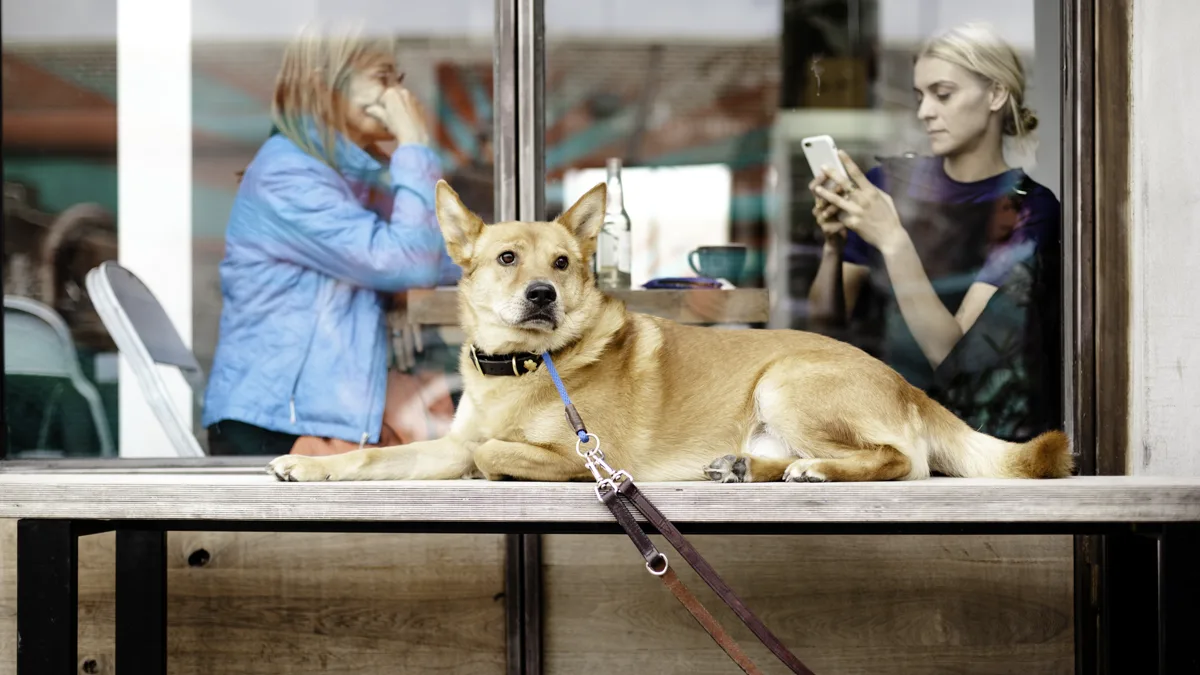
What Gear Should You Bring to Dog Friendly Restaurants?
Bringing a dedicated canine patio survival kit containing a collapsible silicone water bowl, non-slip travel mat, long-lasting chew enrichment, treat pouch, and waste bags ensures your dog remains hydrated, comfortable, and well-behaved throughout your meal.
Equipping your outing with these specific items makes outdoor dining straightforward and safe:
- Collapsible Silicone Water Bowl: Always bring your own clean travel bowl. Many restaurants provide disposable water cups upon request, but allowing multiple dogs to share communal patio bowls increases the risk of transmitting infectious pathogens such as canine papillomavirus and bordetella.
- Roll-Up Travel Mat or Towel: Patios frequently feature rough textured concrete, splintered wooden deck boards, or scorching hot stone pavers. A lightweight fleece pad or padded nylon mat provides clear boundary recognition and thermal insulation against hot or freezing surfaces.
- Long-Lasting Chew Enrichment: Pack a frozen peanut butter rubber toy, bully stick, or dental chew. Providing a satisfying licking or chewing task keeps your dog mentally focused and quiet while you enjoy appetizers and conversation.
- High-Value Treat Pouch: Keep pea-sized dried liver or baked chicken treats accessible to reward calm behavior intermittently whenever servers approach or surrounding noise spikes.
- Biodegradable Waste Bags: Always carry heavy-duty cleanup bags in case your dog requires a bathroom break before or after dining.
Practicing public etiquette in high-traffic environments reinforces core social skills needed on outdoor pathways as well. Learn how to manage close-quarter passes and leash manners by reading our guide to trail etiquette with dogs.
How Do You Choose the Best Dog Friendly Restaurants and Breweries?
Choosing the best dog friendly restaurants involves researching patio layouts, shade coverage, sound levels, and house pet policies in advance to guarantee an enjoyable experience for both handler and pet.
Evaluate these venue characteristics when selecting where to dine:
Craft Breweries and Beer Gardens: Craft breweries and cider houses are traditionally among the most dog-welcoming venues in the hospitality industry. Their spacious open-air grounds, wide picnic table spacing, and self-service counter ordering eliminate high-pressure table service dynamics, giving anxious dogs ample personal space.
Sidewalk Bistros vs. Enclosed Courtyards: Sidewalk cafes directly bordering busy urban streets expose dogs to passing delivery trucks, skateboards, and curious strangers. If your pet is easily distracted or noise-sensitive, prioritize enclosed garden courtyards or rooftop decks with perimeter fencing that blocks external street commotion.
Weather and Shade Assessment: Before booking an outdoor table during mid-summer, confirm that the patio offers full overhead sun shades, canvas sails, or misting fans. Direct solar exposure on dark brick or concrete can quickly elevate ambient ground temperatures above dangerous heat stress limits.

Dining Scenario and Etiquette Matrix
Review the following practical dining protocols to navigate common restaurant situations professionally:
| Patio Situation | Primary Hazard or Concern | Correct Handler Action | Prohibited Practice |
|---|---|---|---|
| Arriving at Restaurant | Blocking main entrance doors | Check in at host stand while companion waits outside with dog | Dragging dog through indoor bar to patio |
| Server Approaching Table | Surprise startle or jumping | Place dog in down-stay beneath chair; reward eye contact | Allowing dog to jump on server apron |
| Dog Begging for Food | Food stealing and digestive upset | Provide handler chew toy; ignore begging cues | Feeding bacon or steak scraps from table |
| Another Dog Arriving Nearby | Leash tangling or reactive barking | Position your body as visual block; create physical space | Permitting nose-to-nose greetings on short leash |
| Water and Hydration | Disease spread or overturned bowls | Fill personal silicon bowl from handler water bottle | Letting dog drink from glassware or beer glasses |
Frequently Asked Questions About Dog Friendly Restaurants
Can restaurant waitstaff pet my dog during meal service?
No. Under standard commercial food safety codes, restaurant servers, bussers, and kitchen staff are legally prohibited from touching or petting customer animals while on duty. If accidental physical contact occurs, employees are required to wash and sanitize their hands thoroughly before handling food items or beverage serviceware.
Are emotional support animals allowed inside restaurant dining rooms?
No. Under Title III of the Americans with Disabilities Act (ADA), only task-trained service dogs qualify for public indoor restaurant access. Emotional support animals (ESAs) and companion pets do not possess public access rights under federal law and are restricted exclusively to outdoor patio areas where permitted by local health ordinances.
Can I feed my dog food scraps directly from my restaurant plate?
No. Feeding dogs from dining plates violates sanitation standards and encourages disruptive begging, whining, and counter-surfing behaviors. In addition, restaurant dishes frequently contain toxic ingredients for canines, such as garlic, onions, heavy butter, and cooked splintering poultry bones. Bring approved dog treats instead.
What should I do if my dog starts barking uncontrollably on a patio?
If your dog barks or whines persistently, immediately redirect their attention using a favorite treat or toy. If the vocalization continues beyond two minutes, politely request a to-go box, settle your bill promptly, and walk your dog away from the dining area to maintain a peaceful environment for other guests.
How we researched this guide: We analyzed municipal health code variances across 25 metropolitan dining districts, FDA Food Code sanitation standards, and veterinary guidelines from the AVMA to establish these patio protocols.
About the Author and Field Testing Standards
Cole Brandt is an outdoor canine travel specialist and obedience researcher dedicated to advancing responsible pet hospitality. Every dining recommendation, gear checklist, and safety protocol published on The White Santorini is developed in accordance with FDA Food Safety guidelines, American Veterinary Medical Association (AVMA) standards, and extensive on-site patio evaluations across North American culinary destinations.