Trailhead notes Successful kayaking with dog partners requires choosing a stable sit-on-top kayak, practicing dry-land obedience conditioning, and outfitting your pet with a high-buoyancy canine life vest. Handlers must install non-slip EVA deck padding, avoid tethering leashes to the boat frame, and master calm water capsize recovery techniques before exploring open lakes and coastal bays.
Paddling across tranquil mountain reservoirs and winding flatwater rivers offers a serene way to explore natural waterways with your canine companion. Dogs enjoy the rhythmic motion of the boat, cooling water breezes, and panoramic sensory stimulation. However, watercraft environments introduce distinct stability challenges, unexpected capsizing risks, and aquatic hazards that require structured preparation.
Transitioning from shoreline walks to water navigation demands progressive desensitization. A panicked thirty-pound dog shifting suddenly to one side can flip a lightweight recreational kayak into deep water instantly. Following a methodical training progression and adhering to essential maritime safety standards ensures confidence and security on every paddling excursion.
- Sit-on-Top Advantage: Open sit-on-top kayaks provide superior canine entry, freedom of movement, and self-bailing stability compared to enclosed cockpits.
- Dry-Land Rehearsal: Practice basic sit-stay and boat boarding commands in your living room or backyard before attempting water launches.
- PFD Non-Negotiable: Every dog must wear a fitted personal flotation device with reinforced spinal rescue handles regardless of swimming proficiency.
- Zero Boat Tethering: Never tie a dog leash to the kayak hull; a capsized vessel will pull a tethered dog underwater with fatal consequences.
- Non-Slip Deck Foam: Apply self-adhesive EVA marine traction pads across the bow deck to give canine paws secure traction on wet plastic.
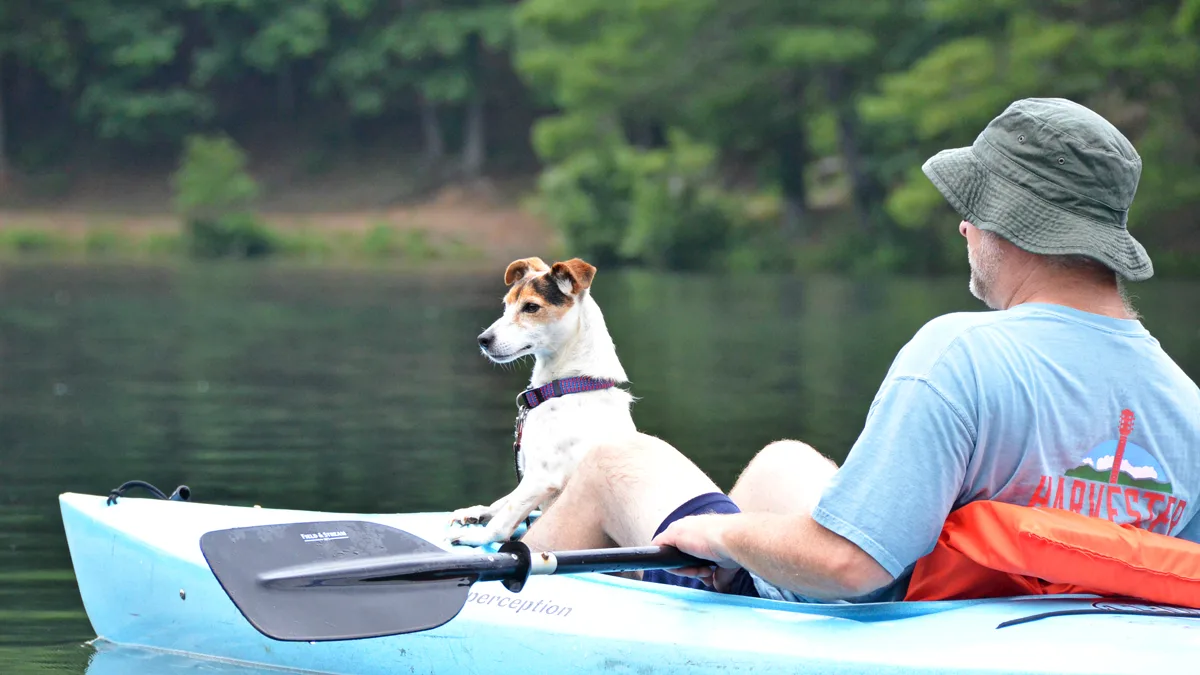
What Boat Type Is Best for Kayaking with Dog Adventures?
A wide sit-on-top recreational kayak with a minimum beam width of thirty to thirty-four inches offers the optimal platform for kayaking with dog companions. Sit-on-top designs feature open deck space between the paddler’s feet or on the forward cargo well, allowing dogs to stand, turn, and lie down without feeling restricted.
Comparing primary watercraft designs reveals distinct operational trade-offs for dog owners:
- Sit-on-Top Kayaks: The undisputed gold standard for paddling with pets. The open, flat deck allows easy canine boarding, self-draining scupper holes remove splashed water automatically, and if the boat flips, the dog easily swims free without becoming trapped inside an enclosed hull.
- Sit-in Cockpit Kayaks: Enclosed sit-in cockpits work reasonably well for small dogs under twenty pounds resting between your legs, but medium and large breeds feel trapped. In a capsize event, a large dog struggling inside a flooded cockpit can obstruct the human paddler’s wet exit.
- Tandem Kayaks: Tandem watercraft provide generous forward seating for medium-to-giant breeds (such as Golden Retrievers or Labradors), allowing the handler to paddle from the rear seat while maintaining continuous visual monitoring of the pet.
- Inflatable Stand-Up Paddleboards (SUPs): Inflatable SUPs offer exceptional deck grip and wide flat stability, serving as an outstanding alternative for calm flatwater lakes.
If your water adventures include coastal inlets or ocean shorelines, review our comprehensive travel guide on visiting dog friendly beaches to understand coastal tidal patterns and surf precautions.
How Do You Train Your Dog on Dry Land Before Launching?
Dry-land conditioning builds canine familiarity and confidence long before your watercraft touches the water. Placing your kayak on a flat lawn or living room carpet eliminates disorienting water wobbles while you teach clear behavioral expectations.
Execute this three-stage land desensitization progression:
- Scent and Surface Familiarization: Place the kayak on flat grass. Scatter high-value treats around the hull and onto the bow deck, allowing your dog to inspect, sniff, and step onto the plastic surface voluntarily without restraint.
- Targeted Deck Positioning: Place a non-slip rubber mat or foam pad on the dog’s designated riding spot. Cue your dog to jump aboard and maintain a settled “down-stay” command while rewarding them with continuous treats for five minutes.
- Simulated Paddle Motion: Sit in the cockpit seat behind your dog with your paddle. Gently sweep the paddle through the air on both sides while rewarding your dog for remaining calm and ignoring the moving paddle blades.
Once your dog reliably holds a five-minute down-stay inside the stationary boat on land, you are ready to progress to calm shallow-water launches.
Essential Canine Kayaking Gear and Safety Equipment
Equipping your dog for water expeditions requires specialized marine gear designed for buoyancy, traction, and emergency retrieval. The following core equipment ensures safety on moving water:
Canine Personal Flotation Device (PFD): A dedicated canine life jacket is an indispensable piece of safety equipment. Even water-loving hunting breeds tire rapidly when swimming against river currents or choppy wind waves. A quality dog PFD features closed-cell foam under the chest and belly, keeping the canine airway elevated above waves, bright high-visibility colors (such as blaze orange or neon yellow), and reflective trim.
Spinal Rescue Handles: The life vest must include one or two high-tensile webbing handles sewn securely across the top spine. These handles allow you to lift a sixty-pound wet dog back onto the kayak deck efficiently without putting painful pressure on their throat or limbs.
EVA Marine Traction Padding: Molded plastic kayak hulls become slick as ice when wet. Apply self-adhesive, closed-cell EVA foam traction decking (such as marine deck grip tape) across the forward seating area so your dog can maintain stable footing during turns and wave chop.
What Is the Step-by-Step Launch and Paddling Routine?
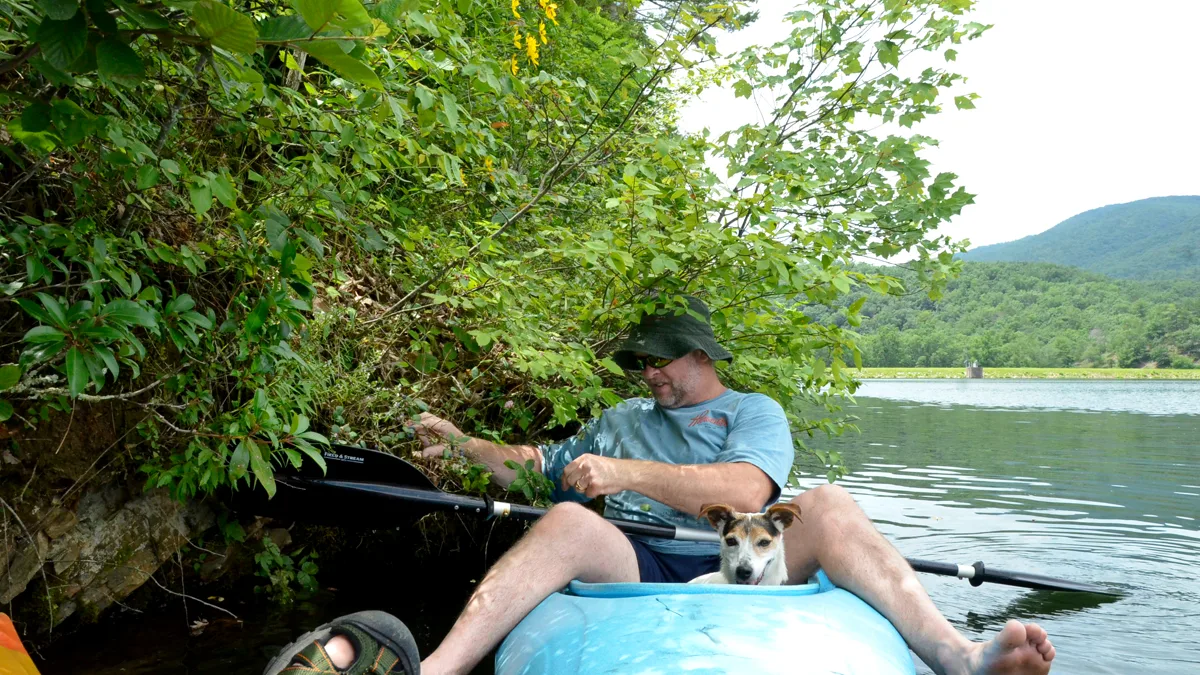
The safest launch routine involves staging your kayak in calm ankle-deep water, boarding your dog first onto their non-slip mat in a stay position, straddling the cockpit with a low center of gravity, and gently pushing off from shore for short initial paddles.
Executing this structured departure progression prevents accidental slips, rocky hull capsizes, and nervous canine leaps:
- Shallow Water Staging: Pull the kayak into ankle-deep calm water parallel to the shoreline, keeping the boat stable on sandy or muddy substrate.
- Canine Boarding Cue: Give your dog their trained boarding cue (“on the boat”) while holding the kayak firmly between your knees. Guide them directly to their padded deck traction spot and place them in a calm sit-stay.
- Paddler Boarding: Straddle the kayak cockpit carefully, keep your center of gravity low, and sit down smoothly into the seat without rocking the boat gunwales.
- Gentle Shore Push-Off: Use the flat blade of your paddle against the shoreline to push smoothly into deeper water, maintaining a calm, encouraging vocal tone.
- Short Initial Paddles: Keep your first three water excursions under twenty minutes, staying within fifty yards of the launch ramp while rewarding your pet for relaxed behavior.
If you plan to combine paddling with backcountry camping trips across designated public recreation zones, consult our field checklist for hiking with dogs to coordinate pack weights and trail stamina.
Water Safety and Emergency Capsize Recovery Matrix
Understanding how to manage capsizing and emergency situations keeps both dog and handler safe in aquatic environments:
| Emergency Scenario | Immediate Hazard Mechanism | Primary Safety Rule | Action and Recovery Protocol |
|---|---|---|---|
| Dog Leaps Suddenly After Waterfowl | Abrupt weight shift rolls boat over gunwale. | Never tether leash to the kayak deck or seat. | Brace with paddle; let dog swim; recall to boat side. |
| Complete Kayak Capsize | Handler and dog separated in deep water. | Stay with boat; never attempt to tow boat while swimming. | Right the kayak first; grab dog PFD handle; swim to shore. |
| Dog Panics and Scratches Handler | Panicked swimming dog attempts to climb onto human head. | Keep life jacket handles between dog and human chest. | Turn dog away from your face; hold top grab handle. |
| River Strainer or Logjam | Flowing current traps boat and animal against sunken timber. | Avoid moving rivers above Class I with canine passengers. | Steer aggressively away from banks; abandon boat if trapped. |
Source: American Canoe Association & United States Coast Guard Auxiliary Paddlesports Standards (checked October 2026).
How Do You Manage Wildlife Distractions on the Water?
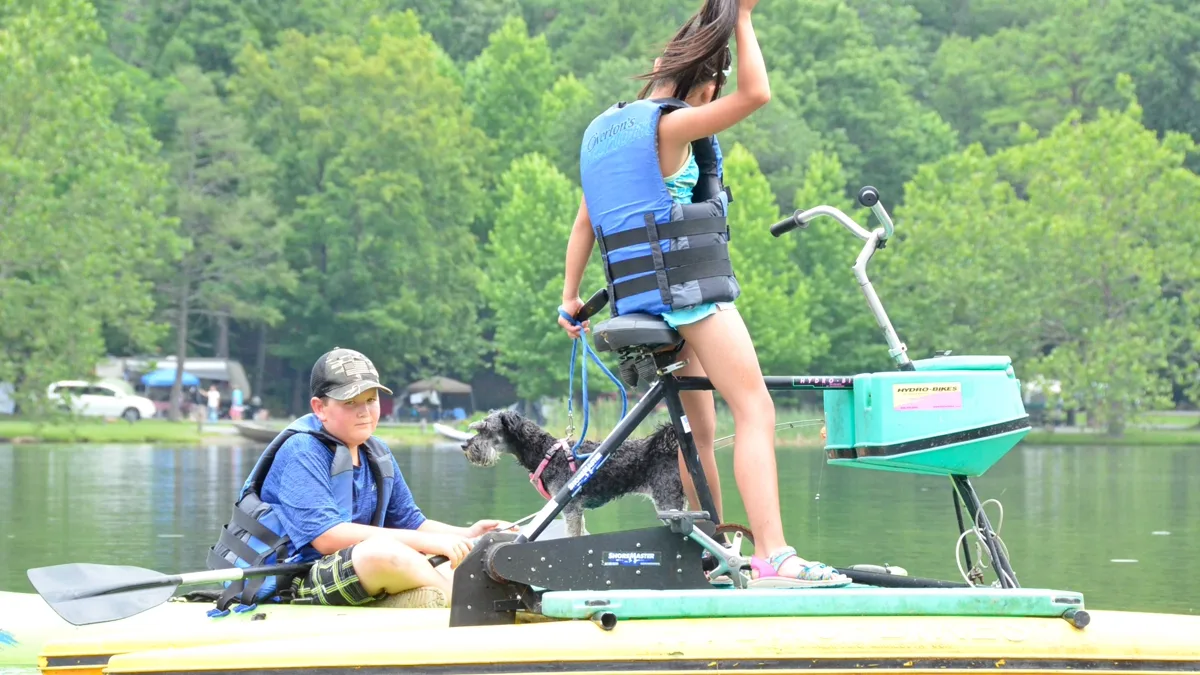
Waterways host abundant wildlife, including ducks, geese, turtles, river otters, and jumping fish, all of which trigger strong predatory drive in sporting and terrier breeds. Managing these sensory distractions requires proactive handler vigilance and rock-solid basic obedience commands.
Maintain continuous situational awareness by scanning two hundred yards ahead along the shoreline. If you spot a flock of geese resting on the water, steer your boat toward the opposite bank before your dog locks visual focus on them. Use a high-value squeak toy or aromatic treat to reward your dog whenever they look toward wildlife and then refocus attention back onto you (“leave it” command).
Before exploring public lake recreation areas across our directory of trails and parks, verify park-specific vessel regulations and seasonal nesting wildlife closures.
Before you launch your kayak
What type of kayak is safest for a dog?
A wide, stable sit-on-top recreational kayak measuring at least 30 to 34 inches in beam width is the safest option. Open decks allow free movement, self-drain water, and eliminate enclosed cockpit entrapment risks.
Should you tie a dog leash to the kayak?
No. Never tie your dog’s leash to any part of the kayak. If the kayak capsizes, an attached leash can drag your dog underwater or tangle them in submerged branches.
Does my dog need a life jacket if they are a strong swimmer?
Yes. Even strong swimming dogs can become exhausted in choppy water or cold currents. A canine PFD provides essential buoyancy and features top rescue handles to lift the dog back aboard.
How do you get a dog back into a kayak after falling out?
Position yourself in the center of the kayak to counterbalance weight, reach over the gunwale to grasp the life vest top handle, and smoothly pull the dog upward onto the deck while they kick their hind legs.
How long should a beginner dog kayaking trip last?
Initial trips should last no more than 15 to 20 minutes in calm, shallow flatwater close to shore, gradually increasing duration as your dog demonstrates calm confidence.
How we researched this guide: Paddlesport safety protocols, watercraft stability engineering, and canine aquatic rescue procedures are synthesized from official guidelines published by the American Canoe Association (americancanoe.org), United States Coast Guard Auxiliary (cgaux.org), and Leave No Trace Center for Outdoor Ethics (lnt.org). The article was drafted with AI assistance and reviewed by an editorial writer.
Sources: American Canoe Association (americancanoe.org), United States Coast Guard Auxiliary (cgaux.org), Leave No Trace Center (lnt.org), and Virginia Department of Wildlife Resources (dwr.virginia.gov).