Trailhead notes Practicing proper trail etiquette with companion animals requires maintaining a six-foot physical leash, yielding the downhill path to uphill hikers and equestrians, and packing out all bagged pet waste. Responsible dog handlers step to the downhill side of narrow singletrack paths, place their dogs in a sit-stay command while strangers pass, and prevent uninvited canine greetings.
Exploring backcountry forest corridors and alpine ridges with a canine partner ranks among the most rewarding outdoor activities. However, shared public trails accommodate a diverse community of recreationists, including trail runners, mountain bikers, horseback riders, family groups, and solo backpackers. When handlers ignore basic trail manners, avoidable accidents, trail closures, and aggressive territorial disputes quickly follow.
Backcountry land management agencies report increasing public friction over uncontrolled off-leash pets and discarded plastic waste bags. Mastering outdoor trail manners is not merely about politeness: it protects fragile riparian ecosystems, prevents wildlife harassment, and ensures continued canine trail access on public lands across the country.
- Physical Leash Requirement: A standard six-foot non-retractable leash prevents unexpected collisions and dangerous wildlife chases.
- Right-of-Way Hierarchy: Dogs and hikers must yield to equestrians; descending hikers yield to ascending uphill travelers.
- Downhill Trail Step-Off: When yielding on narrow switchbacks, always step to the downhill side to avoid looming over oncoming horses or hikers.
- Pack It Out Completely: Leaving bagged feces on the trailside to retrieve later violates Leave No Trace ethics and pollutes public pathways.
- Controlled Greetings: Never allow your dog to approach unfamiliar hikers or leashed dogs without explicit verbal permission from both parties.
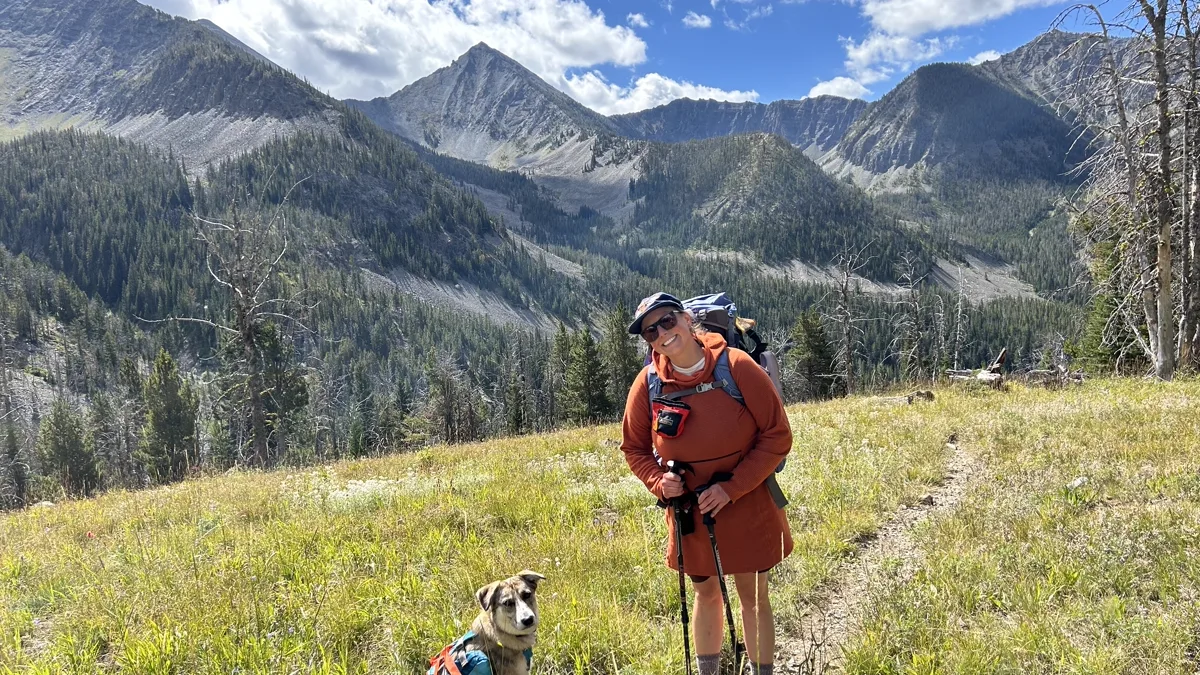
What Are the Core Rules of Trail Etiquette with Dogs?
The core rules of canine trail etiquette center on physical control, proactive communication, and strict environmental stewardship. Before unbuckling your seatbelt at any remote trailhead, handlers must verify local leash mandates and secure their dog on a durable fixed-length lead measuring six feet or shorter.
Retractable flexi-leads represent a severe hazard on crowded singletrack trails. Thin nylon cords cut into human skin, snap under sudden lunges, and allow dogs to round blind corners fifty feet ahead of their owners. Using a fixed webbing leash keeps your animal within your immediate field of influence, allowing swift physical intervention if a rattlesnake or mountain bike appears suddenly.
Before planning extensive backcountry treks across public lands, review our foundational guide on hiking with dogs to assess physical conditioning and canine backpack weight limits.
Who Has the Right of Way on Shared Multi-Use Trails?
On shared public recreation trails, horses maintain the absolute highest right-of-way priority, followed by uphill hikers, downhill hikers, and mountain bicyclists. Dog handlers must always yield to equestrians and uphill foot travelers by stepping completely off the beaten path into stable clearings.
Understanding the biomechanical rationale behind trail yielding prevents serious backcountry collisions:
- Yielding to Equestrians: Horses are large prey animals with keen peripheral vision and strong flight instincts. An unexpected dog bounding around a rocky corner can easily spook an eight-hundred-pound mount, throwing the rider down steep mountain terrain. Always step off the downhill side of the trail, speak calmly to the rider so the horse identifies you as human, and keep your dog securely seated.
- Yielding to Uphill Hikers: Ascending hikers carry heavy cardiovascular loads and maintain limited upward sightlines. Downhill hikers with dogs must pause, step to the trail edge, and allow ascending hikers to maintain their momentum without breaking stride.
- Interactions with Mountain Bikers: While mountain bikers are technically expected to yield to hikers, rapid bicycle speeds on downhill runs often make emergency stops difficult. Alert handlers listen for approaching bells and step off the trail promptly to avoid high-speed impact.
When selecting outdoor destinations across our curated directory of trails and parks, always verify whether specific multi-use paths permit equestrian or mountain bike traffic.
What Are the Common Myths and Facts in Trail Etiquette?
Common trail etiquette myths claim that friendly dogs do not require leashes, that leaving poop bags along paths is harmless, and that dogs share natural right of way. In reality, backcountry regulations require physical leashing on all shared trails, zero waste abandonment, and full yielding to horses and uphill hikers.
Dissecting these common misconceptions highlights essential wilderness ethics:
| Common Trailhead Belief | Actual Trail Reality | Official Land Ethics Standard | Recommended Handler Action |
|---|---|---|---|
| “My dog is friendly, so off-leash hiking is fine.” | Approaching on-leash dogs or fearful hikers creates panic and defensive dog fights. | Strict physical leashing required on all USFS and state park trails unless designated. | Keep leash secured regardless of individual canine temperament. |
| “Leaving poop bags for the return trip is acceptable.” | Over ninety percent of abandoned plastic bags are forgotten or torn open by rodents. | Leave No Trace Principle 3: Pack out all waste immediately upon creation. | Carry a sealed, odor-proof hard container in your day pack. |
| “Dogs have natural right of way because they are animals.” | Domestic dogs hold zero legal right of way over equestrians or uphill hikers. | Canine handlers must yield to all other user groups on shared corridors. | Step aside and put dog in sit-stay until travelers pass completely. |
| “Dog waste is natural and acts as forest fertilizer.” | Canine feces contains high nitrogen and phosphorus, contaminating alpine watersheds. | Requires burial in 6-inch catholes or complete packing out. | Bag and pack out all waste within 200 feet of lakes and streams. |
Source: Leave No Trace Center for Outdoor Ethics & US Forest Service Trail Standards (checked October 2026).
Why Does Leaving Poop Bags on the Trail Violate Wilderness Ethics?
Leaving bright green or blue plastic poop bags along trail edges with the intention of collecting them on the return hike represents one of the most common trail violations. In practice, returning hikers frequently forget the location, take alternate loop routes back to the parking lot, or find that scavengers have dragged the plastic into brush.
Discarded plastic bags create persistent visual pollution for other visitors and pose severe ingestion hazards for wildlife. In addition, concentrated pet waste introduces non-native pathogens such as Giardia, Cryptosporidium, and E. coli into pristine mountain water drainages.
Responsible handlers adopt effective waste transport solutions:
- Hard-Sided Odor Containers: Carry an empty screw-top peanut butter jar, a dedicated plastic pet waste container, or a sealable silicone pouch attached to the outside of your pack.
- Canine Saddlebags: Fit your dog with a comfortable trail pack, allowing healthy adult dogs to carry their own bagged waste in exterior zippered compartments.
- Dedicated Waste Trowels: In deep wilderness zones where packing out is impossible, dig a cathole six to eight inches deep, bury the un-bagged waste, and pack out the soiled toilet paper.
If you plan to visit federal conservation lands, consult our detailed resource on dog friendly national parks to review specific park disposal regulations.
How to Manage Close Encounters with Horses and Wildlife
Managing encounters with stock animals and wild fauna requires immediate handler composure and firm vocal commands. When meeting equestrians on a narrow mountain switchback, never hide quietly behind a boulder or tree, as sudden movements will startle the approaching animal.
Follow these essential encounter protocols:
- Speak Calmly and Early: Announce your presence to the horse rider from twenty yards away with a friendly greeting. Speaking human words reassures the horse that you and your dog are humans rather than stalking predators.
- Step to the Downhill Side: Always move yourself and your dog to the downhill side of the trail. Standing uphill makes your dog appear larger and more intimidating to horses.
- Shorten Leash and Secure Sit-Stay: Shorten your leash to twelve inches, position your body between the dog and the horse, and place the dog into a firm sit-stay command.
- Maintain Wildlife Buffers: If you spot deer, elk, or bears, immediately recall your dog to heel, turn around calmly, and never allow your pet to bark or give chase.
What Is the Correct Step-by-Step Passing Protocol?
The correct passing protocol requires scanning ahead, announcing your approach verbally, stepping off trail onto durable surfaces, and placing your dog in a focused sit-stay until others pass. This systematic routine prevents startle reactions and maintains calm order on narrow singletrack routes.
A standardized passing routine ensures orderly trail interactions when meeting oncoming hikers or faster travelers approaching from behind:
- Visual Scanning: Scan twenty to fifty yards ahead continuously to identify approaching recreationists before your dog alerts to them.
- Verbal Announcement: When approaching slower hikers from behind, call out a friendly verbal notice such as “Passing on your left with a leashed dog” from ten yards away.
- Trail Step-Aside: Move two full steps off the trail tread onto durable bare dirt or rock, avoiding sensitive alpine vegetation.
- Focus Command: Direct your dog’s attention away from the passing traveler using a high-value training treat or a firm “look at me” command.
- Resume Pace: Wait until the passing traveler is five full strides past your position before stepping back onto the main trail path.
Before you hit the trailhead
Why are retractable leashes discouraged on hiking trails?
Retractable leashes provide poor physical control, snap under sudden shock loads, and allow dogs to run around blind corners where they can encounter wildlife or spook horses.
Who yields to whom when meeting a horse on the trail?
Hikers with dogs must always yield to equestrians. Move to the downhill side of the trail, speak calmly to the rider so the horse identifies you, and keep your dog in a firm sit-stay.
Is it acceptable to leave a bagged poop on the trail if I pick it up later?
No. Leaving poop bags creates visual pollution, risks wildlife ingestion, and is frequently forgotten. Always pack out all bagged waste in an odor-proof container immediately.
What should I do if an off-leash dog approaches my leashed dog?
Place yourself between the two dogs, speak in a firm authoritative voice to the approaching dog, and ask the other owner to secure their animal immediately.
Do uphill or downhill hikers have the right of way?
Uphill hikers have the right of way because they are working harder and have a narrower field of vision. Downhill hikers must step aside to allow ascending hikers to pass.
How we researched this guide: Trail etiquette rules, right-of-way hierarchies, and wilderness conservation ethics are derived from official publications of the United States Forest Service (fs.usda.gov), National Park Service (nps.gov), and Leave No Trace Center for Outdoor Ethics (lnt.org). The article was drafted with AI assistance and reviewed by an editorial writer.
Sources: United States Forest Service (fs.usda.gov), National Park Service (nps.gov), Leave No Trace Center for Outdoor Ethics (lnt.org), and American Hiking Society (americanhiking.org).